Tuesday, 2 April 2013

Artificial Autobiography Of Zelda Frizgerald

 photo April02C_zps176210b3.jpg
Zelda Fitzgerald, the beautiful, sparkling and aristocratic wife of the legendary author F. Scott Fitzgerald. The unique lady who had acquired everything life could offer in the happy days of the 20's and had lost it all just as precociously, including her own mind, had always fascinated and attracted endless attention and theories of the dramatic life she had lived and lost. One might assume indifference of her as a person, of the glamorous life she led, the wealth, cocktails, literature, or the electric shocks .... but the story would always return and repeat, in some form or another, bringing her life, short but intense, back to public inspection and analysis again and again. This time in yet another book, a fictional autobiography titled 'Alabama Song', by the French novelist Gilles Leroy, who is in Barcelona to promote the new edition of this book.

Writing a biography of a famous, infamous or any well known personality must involve tremendous amount of work, exhausting researches, references, interviews, etc. to know all there's to know about this person and all the ups and downs she had encountered. To write an 'autobiography' as if you were this person whom you are writing about must be a lot harder still, having to take on this other person's mind, character and personality, that person's speech and mannerism, to emerge and literally become this other person so as to be able to think, view, express and react ... On top of all that, Leroy must also take on the challenge of the gender issue, putting himself under the skin of a complex woman. One of strong will yet fragile, intelligent and naive at the same time, outstandingly wise and logical, yet let her life slide into insanity, oblivion and doom ... Not to mention the background as well as the era Leroy doesn't belong to.

The story is of course also of her famous husband, F. Scott Fitzgerald (The great Gatsby - book and movie), and of the era of the carefree 20's. Leroy wrote the book in 1st person, telling the life story through Zelda's mouth, but he had to feel she must have felt, every page of the way. It won the Goncourt prize in 2007 and now re-published in Spain. He confessed that he spent hours saying the lines out loud from his book in front of a mirror, trying to pronounce every word the way Zelda would have, and that the most difficult part in 'being' her was when she later became mad or crazy, ending up in the psychiatric hospital.

The book intrigues me, because the author does, far more than the story of Zelda's colourful and tragic life, is the 'artificial autobiography'. How does one go about doing that? It's not exactly autobiography because it's not written by the person who is already dead, nor is it exactly artificial because the life and events depicted were all facts, and the person who thinks, talks and acts is not Zelda, not even a woman!

Tags:Zelda,Autobiography

The Thinkers Of The Jungle

 photo z-Orangutan0204_zps88082ad4.jpg
Periodically checking & tidying up old papers & Blogs nearly always turn up something that makes me wonder how I could have forgotten all about them, and not put them in classified 'To keep' files. The Review below is one I wrote in 2009.

Willie Smits was happy and content working as forest microbiologist in Borneo when, passing through the market Balikpapan one day, someone put right in front of him a little cage with a baby orangutan inside. "They were the saddest eyes in the world and I couldn't get them off my head", said one of the authors of the book 'The thinkers of the jungle', in which it tells of the work of their ONG Borneo Survival Orangutan Foundation (BOS) in the island of southeast Asia.

That same afternoon in 1989, Smits returned to the market, by then closed. "I heard whining, choking and pitiful, coming from the rubbish bin" he said, "that baby orangutan I saw earlier on had been thrown into the bin."

Uce, that baby, was the first orangutan this Dutch scientist saved. In the next 20 years 2,000 other orangutans followed. "They live constantly under threat," Smits said, numbering the problems: "the climatic change, the deforestation, fires provoked to cultivate palm oil, the human diseases and the hunters who want them for meat, and their babies for the skulls or bones to make into traditional medicine."

Orangutans are the animals who most resemble humans, sharing 97,8% of our genetic patrimony, and their population in Borneo (some 30,000) decreases each year. "It's a genocide." he sentenced.

"I had not wished to make a pretty brochure, but a book to open the eyes of the people. The books explain the culture of these very intelligent animals. They have learned to fish with a pole or rod, sharpen an axe, wash dishes, sweep the floor, and had learned to swim! They know what plants to take when in pain. I watched them and when once I had a bad migraine, I tried the same plant and it worked. Now all the staff in BOS take it too."

The book contains many beautiful photos, but also included terrible images of abuse inflicted on them by humans. He thinks the tourist should read the book before visiting these countries. Each time they pay to have their pictures taken with these animals, each time they buy tickets to assist spectacles of simian apes boxing or performing tricks, they are participating in the slavery and torture of these animals."

The BOS Foundation has built ecological lodgings with adequate maintenance for tourists in Samboja, right in the middle of the jungle (WWW.sambojalodge.com). They welcome tourists who wish to help and work towards their salvation. The objective is not to convert the animals into pets, nor to humanize them, but to give them a second opportunity so that they can return to the jungle to live a free, natural and peaceful life.

Smits sees Uce every 2 years. She lives with Dodo and their 3 babies. When he found her, he showed her photos of their history. Uce would look intensely at them, caressed them, recognising herself and her friends and relatives. Then she would return the photos to Smits, and goes away happily back to her family and her jungle.

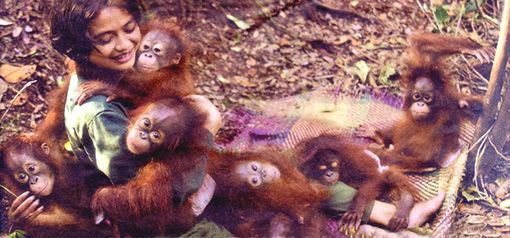
The book was written by Willie Smits, Gerd Schuster, and Jay Ullal. Look at the photo! How the little baby wrapped himself round the leg of the carer for love and comfort! All these babies are orphans because their mothers had been killed or capture by people!!!

Tags:Orangutan,Jungle,Borneo

The Old Prospector & The Young Gunman

 photo April02B_zps94f7bb57.jpg
An old prospector shuffled into town leading an old tired mule. The old man headed straight for the only saloon in town to clear his parched throat.
 
He walked up to the saloon and tied his old mule to the hitch rail. As he stood there brushing some of the dust from his face and clothes, a young gunslinger stepped out of the saloon with a gun in one hand and a bottle of whiskey in the other.

The young gun-slinger looked at the old man and laughed, saying, 'Hey old man, have you ever danced?'

The old man looked up at the gun-slinger and said, 'No,I never did dance, -- just never wanted to.'

A crowd had gathered quickly and the gunslinger grinned and said, 'Well, you old fool, you're gonna' dance now,' and started shooting at the old man's feet. The old prospector in order to not get a toe blown off or his boots perforated was soon hopping around like a flea on a hot skillet and everybody was laughing their heads off.

When the last bullet had been fired, the young gunslinger, still laughing, holstered his gun and turned around to go back into the saloon. The old man turned to his pack mule, pulled out a double barreled shotgun, and cocked both hammers back. The loud, audible double clicks carried clearly through the desert air. The crowd stopped laughing immediately.

The young guns-linger heard the sounds, too, and he turned around very slowly. The quiet was almost deafening. The crowd watched as the young gunman stared at the old timer and the large gaping holes of those twin barrels. He found it hard to swallow. The barrels of the shotgun never wavered in the old man's hands'

The old man said, 'Son, did you ever kiss a mule's ass?' The boy bully swallowed hard and said,' No. But I've always wanted to.'


There are two lessons for us all here:
1. Don't waste ammunition.
2. Don't mess with old people.

I just love a story with a happy ending.

Same Wooden Beam For 3 Husbands

 photo April02A_zps7afdb06c.jpg
Old obituary Of A Witch ~

Cosma Blata, supposedly the witch of Artal, got married the first time in 1941. That her man hung hi
mself on a windy night at the end of a decade didn't constitute news. In fact, until recent times, the suicides, on windOy days, were rather common round the Pyrenees areas. Including it's said to be of solid tradition like that certain locality, in which an iron beam across the landing of a staircase in a deserted building stirred up so much fame, that a group of people had chartered a van, taking advantage of a neat and accessible installation, to take practicers there.

Later on, with the democratic town halls, they first had the entrance blocked up then they demolished the building. But the case of Cosmo Blata (Artal 1919 - Zaragoza 1981) has an added interest: the expectation and fascination had provoked her 2nd husband to suicide too, followed by the 3rd. The expectation of finding clues, with hope of closing the case, and extreme fascination by the place of sacrifice. The empty hall, ventilated and illuminated, the wooden beam polished and extended, the accessories - rope and stool - discreet and opportunely placed in the visible corner, within reach of the hand ...

Julio Munoz Salgado, the judge in charge of the reopening the case of the 2nd and 3rd husbands, asked to be moved. He later wrote a book, memories which are now published (he died in 1993) in which he put footnotes in the 3 scenarios: the hall in the house of the witch of Artal, the landing of the staircase, and the 3rd, of great sentimentalism. Memories of a public servant of the law and justice, detailing the process of the suicides.

One footnote sends chill and shiver up my spine: 'Often, those unfortunate and desperate died not by hanging, but by jumping numerous times to knock their heads against the floor, by fault of the insufficient height of the branch or bough chosen, and by their flexibility. It's not strange to dig out more than one body in the same day, all with heads badly bumped and thickly cover with blood.'
 photo z-Witch0204_zps254a57d6.jpg 
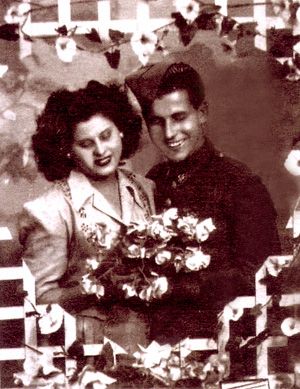
Costa Blata and her 1st husband

Chicken Of Wall Street

 photo April02_zps8ef4e834.jpg
Did you know that in the financial world of Manhattan, the chicken is the only animal politically correct? In almost all the important meetings in Wall Street, the business lunches served are usually chicken - fried, marinated, barbecued, curried, stuffed and roasted - in all ways and combinations you can think of and including a few you would never have thought of.

Marti Saballs, journalist for several years in New York, recalled in his book 'Stories of a correspondent of economy' how he was surprised that chicken was always in the menu in the financial circles, be it a meeting with the Federal Reserve of Philadelphia, or a lunch with the vice president of the International Monetary Funds. So he ended up one day asking a civil servant of the Foreign Press Centre about this. The reply he got was: "There are several explanations: gastronomical, health and religion. It's the only animal politically correct."

Saball investigated this intriguing definition of the chicken. He soon discovered that chicken meat is white, so people of all religion can eat it. Red meat (of beef, lamb, goat, veal) has bad reputation in question of health. Hindus are prohibited to eat it. Jews (there are 2 million in New York) and Muslins are not allowed to eat pork, and turkey is reserved for special occasions like Thanksgiving and Christmas. Fish is never featured because of the smell that lingers even long afterwards in the room.

Curiously, not only is chicken eaten avidly and very popular, they even nickname a type of investors with it: those who do not take risks, keeping their money in bank deposit accounts, in money markets or government guaranteed security certificates. On the other hand, the investors who gamble and take great risks are denominated 'pigs', that for the nature of the game, often end up in gutters.

It is not in his book, but one of the known electoral slogans of the republican candidate in the election of 1928, Herbert C. Hoover, was: 'A chicken in each casserole and a car in each garage'. This one phrase manifested the will and wish to strengthen agriculture and the industry of automobiles. At the same time, the intention of forming a middle class society, with acquisitive power to put food on the table and personal transport to illustrate it's social standing. Hoover took up office in 1929, the year of the black Thursday in the stock market, that announced the catastrophic collapse of the stork market, a historical disaster, leaving all garages as empty as the casseroles.