Tuesday, 16 April 2013

Van Gogh's Ear

April 16B photo April16B_zps1d3bdf1d.jpg
If you are famous, like Van Gogh, there would always be people who try to dig up something you can't remember or even knew about yourself. If there was mystery or any kind of intrigue or scandal in your past, or present, all the better and longer would these be kept alive. Even long after you had stopped to exist.

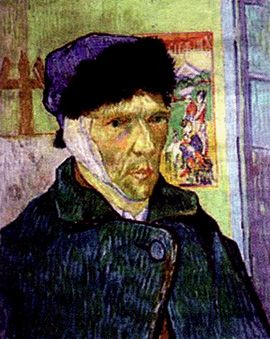
A couple of German historians, Hans Kaufmann and Rita Wildegans, had spent 15 years investigating the matter, and had come to the conclusion, affirming that, against what has always been believed, Van Gogh's ear was not cut off by himself as the result of an attack of madness, but had actually been severed by the problematic artist's personal friend Paul Gauguin, because of a violent quarrel in front of a brothel in Arles. Afterwards, they had for some reason made a pact of silence on both parties.

To me any way the part that intrigues more is not this new discovery, but the reason of the pact (presuming the new revelation being true). Why would Van Gogh prefer to go by the general assumption of the whole world, that he had gone raving mad to the extent of cutting off his own ear, than to let the fact be known that his friend Paul was responsible. Why was it necessary to protect him? Or was it that he was protecting himself of ... what? Reputation? Not that it was important. He was famous and remembered not because of his having one or both ears. Or was it?

My question is: would he have been just as famous and well remembered had the incident never happened?
z-Van Gogh -1604 photo z-VanGogh-1604_zps59001deb.jpg
His self portrait with the bandaged ear.

Tomb Art

April 16C photo April16C_zps6c3bbb48.jpg
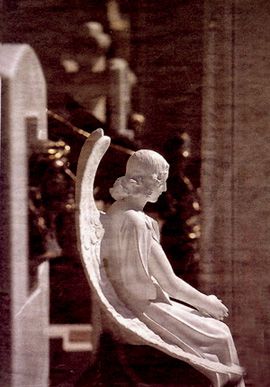
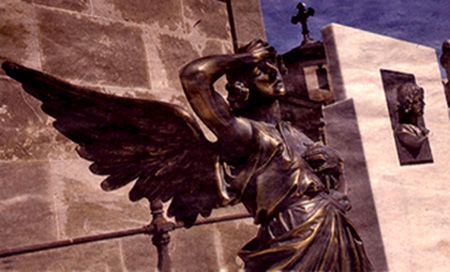
Cemeteries of Barcelona has incorporated modernistic sculptures to their funeral services. The company of the municipal has signed an agreement with Art Cristia, to reproduce replicas of sculptures by Spanish maestros of modern art, all of famous names and prestigious reputation, that offer these art work to install in tombs and cemetery niches.

The catalogue of sculptures were presented in the cemetery of Poblenou. To begin with, these are limited to just 5 models, ranging from prices of €700 to €4,000.

I have often wondered whether the very elaborate tombs of the rich and famous, especially in the olden days and better times, were for the deceased or for the living. Sandalwood or genuine teak coffin with pure silk pillow wouldn't make the dead less dead or more
comfortable. So it must be for the purpose of showing the importance or wealth of the dead and for easing the pain of the living, that their beloved ones are pampered and cared for even
in death.

When it's my time to go, I wouldn't want anything, not even a grave or tomb. Cremation. Done, in every sense of the word.
z-TombArt 1-1604 photo z-TombArt1-1604_zpsbb12c6ae.jpgz-TombArt 2 -1604 photo z-TombArt2-1604_zps89ae850a.jpg
Tags:tombart

Wash Hands Saves Lives

April 16A photo April16A_zpsff80b71a.jpg
It was the first serious advice given about 3 years by the World Health Organization to reduce the risk of contracting the Swine Flu, also the Cholera, diarrhoeas and other infectious diseases. They had decided to promote this practice, even declaring an annual day, the 5th of May, to be the world's virus conscious day under the slogan or motto: "Wash Hands Saves Lives". With the hospitals jammed packed by patients with Flu and infected diseases, the warning is obviously not been sufficiently heeded.

Washing hands is such a habit of basic personal hygiene, yet few rest sufficient importance to seriously practice it. Not that doing so would guarantee germs not attacking via the digestive system. But flu virus act differently. It's contagious mainly through contact of hands that, through the course of the day, work and tasks, accumulate great number of germs. Washing hands is not a cure-all remedy, but it's an important procedure, simple to execute and effective.

The thorough study showed that even sanitary personnel in clinics and hospitals don't wash their hands as frequently as they should, mainly because it's practically impossible to do so immediately before and after having touched a patient, or been in contact with any body fluids, or simply entering and exiting a room or ward each time they have to. The transmission of the microorganism or pathogen through the sanitary personnel is the principle path of contagious diseases in a hospital.

The study also shows that 7% of patients in hospital wards are affected this way. This percentage hasn't varied for many years. The objective is to reduce it to 5% as, to go below that is 'mission impossible' given the fact that a hospital is where many germs and many people circulate. It's has been calculated that 40% of the infections contracted in hospitals were avoidable. An revealing fact. Meanwhile, all hospitals here in Spain are installing more handwash basins and dispensers of disinfectant in all areas.

My friend who is sitting right next to me now waiting for me to finish this Blog says:
"Right. I will definitely wash my hands every 5th of May, whether I need it or not!"

The Handy Woman

April 16 photo April16_zps00944eec.jpg
The Handy Woman ~

Rita, a beautiful blonde, is fed up being typecast by men as silly, useless, and starry-eyed. "I’m as good as most men I meet," she says to herself and makes a decision to prove it - she will earn some decent money by hiring herself out as a handyman.

First thing next morning, Rita begins canvassing the wealthy Hampstead neighbourhood and starts by ringing the bell of the first house in the first road she comes to. This happens to be Moshe and Leah’s house. When Moshe opens his door, Rita asks him if he has any jobs for her to do.
"Well, my porch needs painting. How much will you charge me?"
Rita thinks for a while, then replies, "£40."
"OK," says Moshe, "you’re hired. You’ll find the paint, paintbrushes, primers, scrapers and other such tools in my garage. It’s not locked."

When Rita goes into the garage, Leah says to Moshe, "Do you think the girl realises that we have a very large porch?"
"That’s up to her to find out," replies Moshe, "let’s leave her to it."
Thirty minutes later, Rita knocks on the door to collect her money.
"You're finished already?" asks Moshe, most surprised.
"Yes," replies Rita, "and as I had paint left over, I gave it an extra coat."

Impressed, Moshe reaches into his pocket for his wallet. But before he could pull it out, Rita says,
"And by the way," wanting to show off her knowledge, "it's not a Porch, It's a Ferrari."

Philosophical questions ~

• If man evolved from monkeys and apes, why do we still have monkeys and apes?
• If I went to a bookshop and asked for the self-help section, would it be defeating the purpose?
• Is there another word for synonym?
• What was the best thing before sliced bread?
• Do infants enjoy infancy as much as adults enjoy adultery?
• Why are haemorrhoids called "haemorrhoids" instead of "asteroids"?
• Why is there an expiration date on sour cream?

A South American scientist from Argentina , after a lengthy study, has discovered that people with insufficient brain and sexual activity read their e-mail with their hand on the mouse.

Don't bother taking it off now, it's too late.

Tags:philosophy,handywoman