
If
you are famous, like Van Gogh, there would always be people who try to
dig up something you can't remember or even knew about yourself. If
there was mystery or any kind of intrigue or scandal in your past, or
present, all the better and longer would these be kept alive. Even long
after you had stopped to exist.
A couple of German historians, Hans Kaufmann and Rita Wildegans, had spent 15 years investigating the matter, and had come to the conclusion, affirming that, against what has always been believed, Van Gogh's ear was not cut off by himself as the result of an attack of madness, but had actually been severed by the problematic artist's personal friend Paul Gauguin, because of a violent quarrel in front of a brothel in Arles. Afterwards, they had for some reason made a pact of silence on both parties.
To me any way the part that intrigues more is not this new discovery, but the reason of the pact (presuming the new revelation being true). Why would Van Gogh prefer to go by the general assumption of the whole world, that he had gone raving mad to the extent of cutting off his own ear, than to let the fact be known that his friend Paul was responsible. Why was it necessary to protect him? Or was it that he was protecting himself of ... what? Reputation? Not that it was important. He was famous and remembered not because of his having one or both ears. Or was it?
My question is: would he have been just as famous and well remembered had the incident never happened?
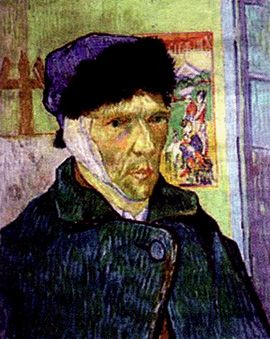
His self portrait with the bandaged ear.
Tags:vangogh,ear
Current Mood:  Artistic
Artistic

No comments:
Post a Comment