Lee
Israel, who years ago had aqcuired certain reputation as biographer of
old time celebrities, renowned politicians, famous authors, screen and
stage actors, rock stars ... had written a book called: 'Can you ever
forgive me? - Memories of a literary falsifier'. Her own story, written
after she had been discovered by the FBI, and condemned to 5 years of
conditional liberty and 6 months of house arrest.
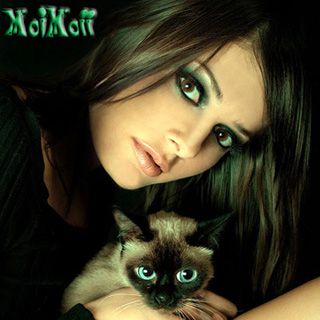
It all started with a cat, Doris. It refused to eat, and her owner Lee Israel, had no money to pay the vet's bill. She was 50, had had a few financial mishaps, then bordering on total ruin, and addicted to Gin.
One day, while looking for information for a book in the library, Lincoln centre, near her apartment in the Upper West side of Manhattan, she hid 3 letters of an actress Fanny Brice in her own note file, left the library and went straight to a merchant who dealt with ancient documents, authentic autobiographies or signed copies of the famous or inminent. The letters were immediately sold.
The merchant wanted more originals. Israel thought it was much easier to falsify than to steal them. Thus started her brief - but productive - career of a literary falsifier. Between 1990 to 1991 she falsified some 400 letters, amongst other actors like Louise Brooks and Humphrey Bogart, writers like Dorothy Parker and dramatist like Noel Coward.
The success of the firm was such that 2 of the letters, supposedly hand written by Coward, were included in 'The Letters of Noel Coward', the volume published and edited by Barry Day, one of his most laborious and most reputable work.
Her latest book detailed all she had done in 129 pages, including the who, the when and the how. This book had infuriated many honest merchants and biographers, voicing their disbelief how a reputable and prestigious publisher like Simon & Schuster rewarded Israel by editing the memories of her shameful doings. Eve Golden wrote a letter for the literary supplement of The New York Times, that she likes to see Israel's head under the stone cutter in front of the New York Public Library.
Others had doubts re. the total veracity of her account. After all she was a very competent writer and a book like this surely sells like hot cakes for it's controversy alone. While those merchants who had actually been involved would certainly keep their unconditional silence.
In the world of plastic art, falsification is nothing new. It's almost a tradition. In paintings mostly, not as much in text perhaps. One of the most noted precedency of falsified text was 'The Diary of Hitler', which, in the beginning of the 80's, had even been authenticated by historians!
The method she used was always the same. Sought out original letters from achieves and libraries, with transparent paper copied the signatures. Later studied the person and her style of writing, all very similar to her normal task as a biographer. At first she falsified existing letters, then she ventured out to invent them, based on the real ones. In the case of Dorothy Parker, she centred it in the years when Parker lived in Hollywood in the 60's, rubbing shoulders with other celebrities, affording her ampler and jucier material, always respecting some true elements. As she called it: "Truth in the wider sense"
She wrote that the most fun she had was falsifying the 150 letters of Coward, as she had to take great care to stick to his English verbalism and his special brand of sharp, and sometime black, British humour, of which Coward was well famed of. She must be having too much fun as, precisely because she falsified so many letters of Coward, one had been read by a friend who knew Coward quite well and instantly raised suspicion that Coward should be talking about his homosexuality, which in real life he never admitted to. She herself thought it strange later that it had taken so long for this to be discovered. The more controversial the contents, the higher price the merchants could fetch. She reckoned they were making too much money becoming careless whom they sold the letters to.
When asked whether she regretted having done what she did, she said only for stealing from libraries, not the falsification, during the period of which she had turned out the best work of her whole career to date, a better falsifier than a wirter; she herself so puts it.
First the fault of the cat. Later the blame on book merchants. I begin to have doubt that her new book asking for forgiveness was genuine.
Tags:falsifier,noelcoward,autobiography
Current Mood:  Artistic
Artistic

No comments:
Post a Comment